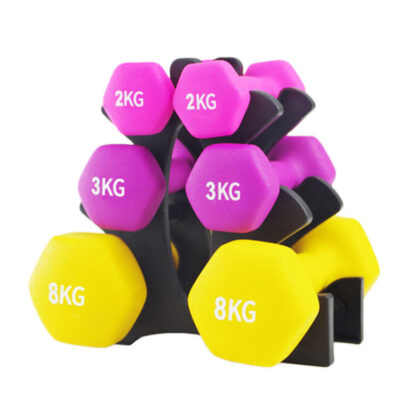
Why Weight Plate Compatibility Matters
✔️ Safety & Member Experience
Mismatched plates can damage bars, cause rattling during lifts, or even lead to accidents. Ensuring compatibility across your dumbbells, barbells, and racks is critical for smooth training.
✔️ Procurement Efficiency
When weight plates are standardized, gyms save on replacement costs and reduce member complaints about inconsistent fit.
Step 1 — Understanding Bore Sizes
🔹 Standard Bore (25 mm)
Common in light-duty or home equipment.
Not ideal for commercial gyms due to lower strength capacity.
🔹 Olympic Bore (50 mm)
Industry standard for commercial gyms.
Compatible with Olympic barbells and higher load-bearing sleeves.
🔹 Specialty Bores
Some plates are tailored for custom bars or strength sports.
Buyers should confirm whether their chosen supplier can customize bore diameters.
Reliable Dumbbell Manufacturers typically align plate bore tolerances with global barbell standards, ensuring long-term compatibility.
Step 2 — Material & Coating Options
✔️ Cast Iron Plates
Traditional, cost-effective, but prone to rust without coatings.
✔️ Rubber-Coated Plates
Protect floors, reduce noise, and extend barbell sleeve life.
✔️ Urethane-Coated Plates
Premium finish, abrasion-resistant, odor-free, and customizable with logos or Pantone colors.
Top Weight Plate Manufacturers can provide side-by-side coating samples to help procurement teams match durability with branding needs.
Step 3 — QA Testing Protocols
📌 Load Testing
Plates should be tested at maximum load capacity to ensure safety under stress.
📌 Drop Tests
Simulate gym use by repeatedly dropping loaded bars from standard heights to confirm coating durability.
📌 Salt-Spray Testing
Validates resistance to corrosion, particularly for coastal or humid climates.
📌 Abrasion Resistance
Checks whether logos and finishes withstand thousands of re-rack cycles without fading.
Step 4 — Color Coding & Branding
🎨 Competition Colors
Adopted globally for Olympic lifting:
Red = 25 kg
Blue = 20 kg
Yellow = 15 kg
Green = 10 kg
🎨 Custom Branding
Logos can be laser-etched or printed on urethane coatings for premium aesthetics.
🎨 Pantone Matching
Aligning plates with dumbbell and barbell branding creates a unified visual identity for gyms.
Step 5 — Logistics & Procurement Tips
📦 MOQ (Minimum Order Quantity)
Typically 2–5 tons per order, depending on coating and customization.
📦 Lead Times
Standard rubber plates: 30–40 days.
Urethane plates: 45–60 days due to longer curing processes.
📦 Freight Optimization
Plates are dense; efficient palletization and container loading reduce shipping costs. Buyers should confirm cubic load efficiency before booking freight.
Step 6 — Safety Standards & Compliance
✅ EN ISO Certifications – Confirm materials meet global safety norms.
✅ RoHS & REACH Compliance – Required for EU and North America.
✅ Factory Audits – Ensure suppliers have documented QC procedures in place.
Final Thoughts for Buyers
Weight plates may appear simple, but compatibility and quality control define their long-term performance. By standardizing bore sizes, choosing the right coatings, and enforcing QA testing, procurement teams can avoid costly replacements and ensure safe operations.
Working with trusted Dumbbell Manufacturers and specialized Weight Plate Manufacturers guarantees that plates align with barbells, racks, and dumbbells—creating a unified, safe, and professional free-weight ecosystem.